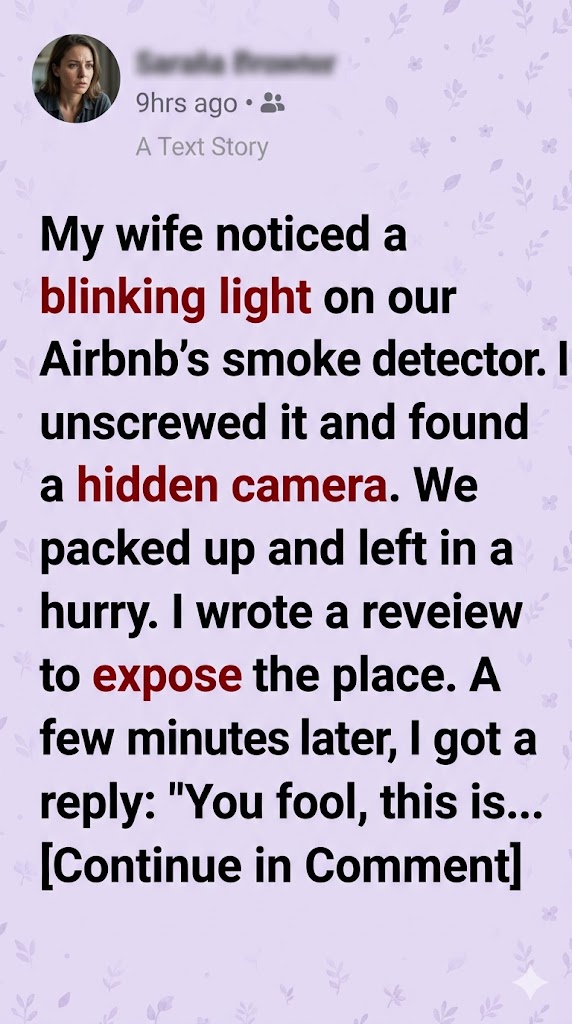
The attraction of a weekend retreat often resides in the guarantee of seclusion and the comfort of a home away from home, but for my spouse and me, a recent excursion transformed into a plunge into a waking horror. We had reserved a delightful isolated cabin through a popular rental service, seeking nothing more than a few days of tranquility and an escape from urban life. The images displayed a comfortable living area with a hearth and expansive windows overlooking a woodland. Upon our arrival, it seemed flawless. The atmosphere was refreshing, and the dwelling felt inviting. However, that feeling of serenity was shattered during our second night when my spouse noticed a faint rhythmic flashing emanating from the smoke alarm positioned directly above our bed. It was a tiny pinpoint of illumination, a cold mechanical blink that seemed incongruous in the dark chamber.
Inquisitiveness rapidly soured into a cold knot of terror in my gut. I dragged a chair over to the bed and climbed up to examine the apparatus. At first glance, it resembled any standard smoke alarm, but as I angled my head, I perceived the unmistakable glimmer of glass behind one of the small plastic vents. It was a camera lens, miniature and sophisticated, positioned to record every square inch of the sleeping quarters. The realization struck me like a physical impact. We weren’t visitors; we were subjects. Without uttering a single word, propelled by a sudden and overwhelming survival instinct, I gestured to my spouse. We didn’t deliberate it, we didn’t contact the platform, and we certainly didn’t confront the proprietor. We hurled our garments into our luggage, abandoning anything non-essential, and escaped into the darkness.
We drove in complete silence, our eyes darting to the rearview mirror every few seconds. I didn’t feel secure until we were two municipalities away, parked under the harsh fluorescent lights of a 24-hour eatery. Safe in the presence of witnesses, I finally extracted my phone. My hands trembled as I composed an urgent and scathing evaluation of the property. I desired to warn anyone else who might be viewing those comforting images that they were being monitored. I anticipated a denial or an apology, but the proprietor’s response arrived within minutes and was far more menacing than any excuse. The proprietor accused me of damaging an expensive transmitter connected to a private security system. Then they added a sentence that made my blood run cold. They wrote: “They will come looking for it.”
The ambiguity of the threat was the most horrifying aspect. It wasn’t a legal warning or a demand for restitution. It was an announcement of an impending arrival. Attempting to decipher the proprietor’s words, I began scrolling through the photographs I had captured of the cabin upon our arrival. I was searching for anything I might have overlooked. As I magnified a photo of the living area, I perceived it. Concealed behind the heavy velvet drapes was a small glowing red laser dot. It wasn’t a reflection, and it wasn’t a stray light from a device. It was a tracker, a high-tech marker used to monitor movement within the residence. The entire stay had been a meticulously orchestrated arrangement. We hadn’t just been observed; we had been tagged.
The realization that someone might be tracking our location in real time sent a fresh wave of panic through us. We abandoned our plans and drove for three more hours, propelled by pure adrenaline until we reached a large chain hotel in a major metropolis. We checked in under a different name, and I made the decision to destroy the disposable phone I had used to manage the reservation. It felt as though we were characters in a spy thriller, but the fear was profoundly genuine. The following morning, I entered a police station to file a report. I presented them with the photographs of the smoke alarm and the screenshot of the proprietor’s threat. The officer was empathetic, but I could discern he had encountered situations like this previously. He informed me that these types of sophisticated surveillance arrangements were becoming increasingly common and that the individuals behind them were often part of larger, more dangerous networks.
Even with a police report filed and a hotel door double-bolted, I couldn’t find peace. That night, as I lay awake listening to the muffled sounds of the metropolis outside, I realized that our entire concept of safety is a fragile illusion. We exist in a world where we trust strangers based on a few five-star reviews and a collection of staged photographs. We invite ourselves into the homes of individuals we don’t know, believing that a corporate platform is sufficient to shield us from the darker aspects of human nature. The blinking light in that smoke alarm wasn’t a safety feature designed to protect us from fire; it was a predatory tool designed to strip away our privacy and perhaps our lives.
The experience altered my perception of the world. I no longer perceive a cozy rental as a sanctuary; I see it as a collection of blind spots. I contemplate the other visitors who stayed in that room before us—the ones who didn’t notice the light or the ones who did but were too frightened to depart. I wonder what happened to the transmitter the proprietor was so concerned about and who the “they” were who were supposedly coming to locate it. The proprietor never contacted us again, and the listing was eventually removed, but the psychological damage persisted.
Safety is something we take for granted until the moment it is stripped from us. We navigate through life assuming that the walls surrounding us are solid and that the eyes observing us are benevolent. But sometimes the reality is much more sinister. Behind the facade of a typical suburban residence can lie a web of surveillance and intent that most people can’t even fathom. The contemporary world has made it easier than ever for predators to hide in plain sight, utilizing the very technology that is supposed to make our lives more convenient. Every time I perceive a blinking light now, whether it’s on a smoke alarm or a television set, I feel a sharp jolt of anxiety. I am reminded of that cabin in the woods and the cold realization that we were being hunted. Sometimes the light isn’t there to warn you about a fire; it’s there to let you know that you are no longer alone. The memory of that night remains a permanent scar, a reminder that in the age of the internet and global connectivity, the most dangerous place you can be is exactly where you think you are safe.
