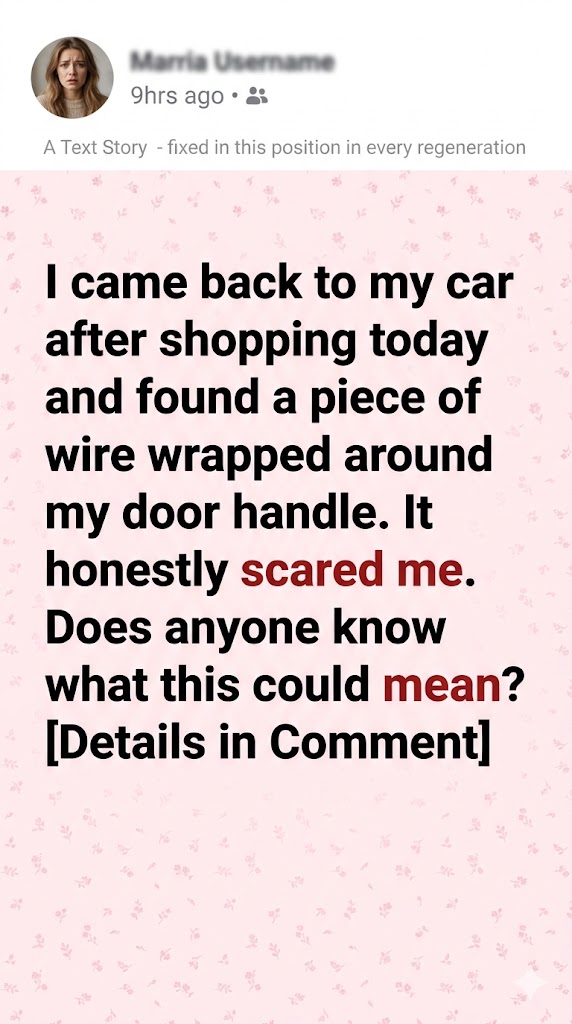
A routine trip to a parking lot recently turned into a viral internet mystery after a woman noticed something unusual tied around several car door handles. At first glance, the objects seemed harmless—thin ribbon-like strings loosely wrapped around handles in different sections of the lot. But the discovery immediately triggered concern because it felt intentional. Why would random cars all have similar objects attached to them? The woman, later identified online as Shannon, recorded a short video showing the strings and posted it to TikTok, where the clip exploded across social media. Within hours, thousands of viewers began sharing theories ranging from innocent pranks to terrifying criminal tactics. Some users insisted the strings were “markers” used by thieves or kidnappers to identify targets. Others argued the objects might be distractions designed to delay drivers long enough for someone nearby to approach unnoticed. Fear spread rapidly because the situation touched on something deeply personal: the vulnerability people often feel alone in parking lots, especially at night. The comments section quickly filled with stories from viewers claiming they had seen zip ties, ribbons, flyers, coins, or wires placed on vehicles in their own communities. Whether true or exaggerated, the stories fueled anxiety and transformed a simple parking lot observation into a nationwide discussion about personal safety. The internet’s reaction revealed how quickly uncertainty can evolve into fear when an unexplained situation intersects with public concern about crime and security.
Part of what made the video so unsettling was how ordinary the objects appeared. There were no threatening messages, no visible damage, and no direct confrontation—just strings tied to handles in a way that seemed strange enough to attract attention. That subtlety is exactly why online theories gained traction. Another content creator named Reese added fuel to the speculation by suggesting criminals sometimes use small distractions to create moments of hesitation. According to the theory, a driver noticing an object attached to their car may stop, investigate, or become briefly distracted while removing it, potentially lowering their awareness of the surrounding environment. Supporters of the theory argued that even a few seconds of distraction in an isolated parking lot could create vulnerability. Videos discussing similar claims soon flooded social media feeds, with users warning people about zip ties, wires, stickers, or even water bottles placed near vehicles. Some creators described elaborate scenarios involving trafficking rings or organized criminals using subtle “markers” to track victims. These frightening narratives spread rapidly because they played into existing fears people already carry about safety in public spaces. The combination of uncertainty, mystery, and emotional storytelling made the warnings feel believable to many viewers. Yet the internet often amplifies fear faster than facts, and as the theories spread, experts and law enforcement agencies began stepping in to address the growing panic. Many officials pointed out that while people should always remain aware of their surroundings, there was little verified evidence linking these specific objects to organized criminal schemes. Still, the emotional impact of the videos continued influencing millions of viewers who began checking their own vehicles more carefully after every shopping trip.
One reason these warnings become so powerful online is because they exploit a natural psychological response: humans are wired to search for hidden threats. When people see unexplained objects placed somewhere personal—especially on a vehicle they rely on for transportation and safety—it creates immediate discomfort. Social media intensifies that discomfort by allowing thousands of frightened reactions to pile up within hours. A single unexplained string becomes transformed into a potential warning sign of danger simply because enough people speculate about worst-case scenarios. Experts in misinformation and digital culture often explain that fear-based stories spread especially fast because they encourage sharing. People repost warnings not necessarily because they know they are true, but because they feel responsible for protecting others “just in case.” The emotional logic becomes: “Even if this only might be real, I should warn people.” Unfortunately, this can blur the line between awareness and panic. Law enforcement agencies across different regions have repeatedly addressed viral claims involving zip ties, ribbons, and mysterious vehicle markings, noting that many stories circulating online lack evidence connecting them to actual criminal operations. Some warnings have later been traced to misunderstandings, harmless pranks, maintenance markings, or isolated incidents exaggerated through repetition. That does not mean strange situations should always be ignored, but it does mean people should approach viral claims carefully rather than immediately assuming the worst. Public safety experts generally encourage practical vigilance instead of panic-driven reactions. Staying alert, parking in well-lit areas, keeping phones accessible, and trusting instincts when something genuinely feels wrong are all reasonable precautions. However, spreading dramatic claims without evidence can create unnecessary fear and distract attention from real, verified safety concerns.
Even though many online theories remain unverified, the conversation surrounding the car door strings has highlighted something important about modern life: people increasingly feel vulnerable in public spaces and are searching for ways to protect themselves. Parking lots especially tend to trigger anxiety because they combine isolation, distraction, and unpredictability. Drivers are often focused on shopping bags, phones, children, or locating keys rather than observing their surroundings carefully. Criminals who commit thefts or assaults frequently rely on opportunity and distraction, which is why general awareness remains valuable regardless of whether viral stories are true. Security professionals recommend simple habits that reduce vulnerability without encouraging paranoia. Before approaching a vehicle, it helps to quickly scan the surrounding area and trust any instinct that something feels off. If an unusual object is attached to a car, experts suggest remaining calm rather than immediately panicking. In many cases, it may be harmless litter, a prank, or something accidental. Still, if the situation genuinely feels suspicious—especially in isolated locations—it may be safer to return to a public area, contact security, or ask someone to accompany you. Many people also benefit from avoiding distractions like texting while walking through parking lots. Keeping keys ready before reaching the car, locking doors immediately after entering, and parking near entrances or lights are all small habits that increase personal safety without feeding into internet hysteria. The real lesson is not that every ribbon or wire signals danger, but that awareness and preparation matter more than fear. Confidence, calm observation, and practical habits tend to protect people more effectively than viral panic ever will.
The viral story also reveals how social media has transformed the way communities respond to uncertainty. In previous decades, unusual discoveries might have been discussed among neighbors or reported quietly to local authorities. Today, a single short video can instantly reach millions of viewers across the world, each adding their own interpretation, fear, or speculation. Algorithms tend to reward emotionally charged content, especially material involving danger or mystery, because people engage with it intensely. As a result, dramatic theories often spread faster than cautious explanations. Once fear takes hold online, it becomes difficult to separate fact from assumption. This pattern has appeared repeatedly with stories involving “secret symbols,” coded markings, or suspicious objects allegedly connected to criminal activity. While some isolated incidents may involve genuine wrongdoing, experts warn against assuming every viral claim represents a widespread organized tactic. Fear can unintentionally distort perception, causing ordinary events to appear threatening simply because people have been primed to expect danger. That said, dismissing all concerns outright can also feel invalidating to individuals who genuinely experience unsafe situations. The healthiest response usually lies somewhere in the middle: stay observant, trust your instincts, but avoid spreading unverified claims as proven fact. Social media can be a useful tool for awareness when information is accurate and responsibly shared, but it becomes harmful when fear overtakes evidence. The story of the strings on the car handles became so viral not necessarily because the objects themselves were dangerous, but because they tapped into a deeper collective anxiety about safety, uncertainty, and the fear of being caught off guard in an unpredictable world.
Ultimately, the most important takeaway from the incident is not whether the strings were part of a criminal scheme, but how people choose to respond to uncertainty in everyday life. Strange discoveries will always happen, and not every unexplained object has sinister meaning behind it. Yet moments like these remind people to remain present and aware rather than moving through public spaces completely distracted. Awareness does not require living in fear. In fact, the goal of practical safety habits is often the opposite: they allow people to move through the world with greater confidence and calm. Locking doors, staying alert in parking lots, avoiding isolated areas late at night, and paying attention to surroundings are reasonable habits regardless of viral trends. At the same time, resisting the urge to immediately believe every frightening internet theory helps prevent unnecessary panic and misinformation. The story of the strings tied around car door handles became powerful because it blended mystery, fear, and modern social media culture into one emotionally charged narrative. But behind the headlines and speculation lies a simpler truth: people want to feel safe, informed, and prepared. Sometimes that means questioning suspicious situations. Other times it means questioning the stories spreading online about them. The balance between caution and clarity matters more than ever in a world where one short video can instantly convince millions that danger may be waiting in the next parking lot.
